
Business strategy
How offers, audiences, funnels, and roadmaps become clearer
Insights
Practical thoughts on strategy, websites, automation, analytics, and delivery
Explore our articles
Patterns, methods, metrics, and systems
Read practical notes and frameworks from HITEXIS
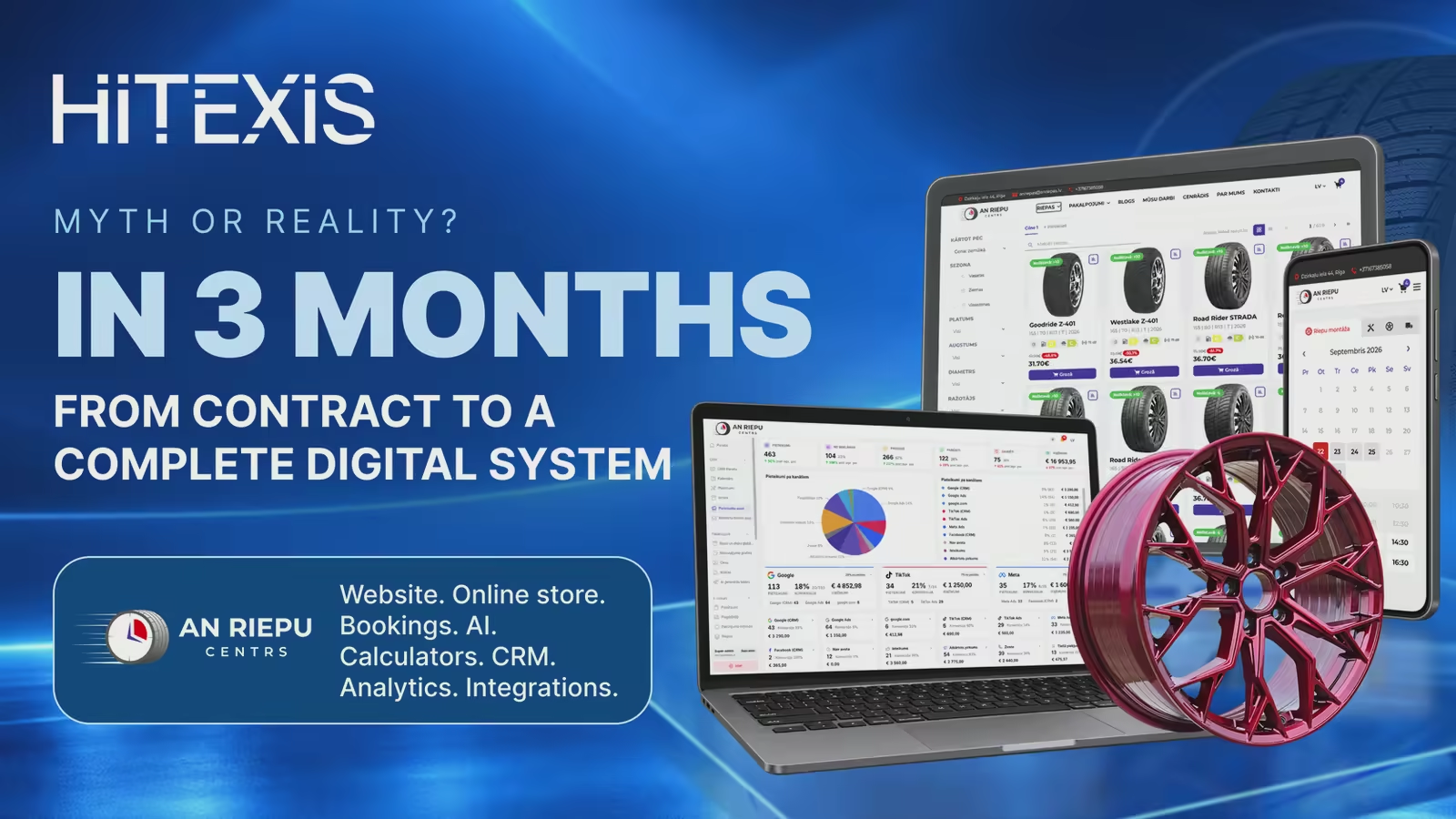
When we began working with AN Riepu Centrs, the task went far beyond a visual website redesign. The business needed a unified digital platform combining its public website, online tyre store, service booking, customer enquiries, supplier data feeds and day-to-day operations management.

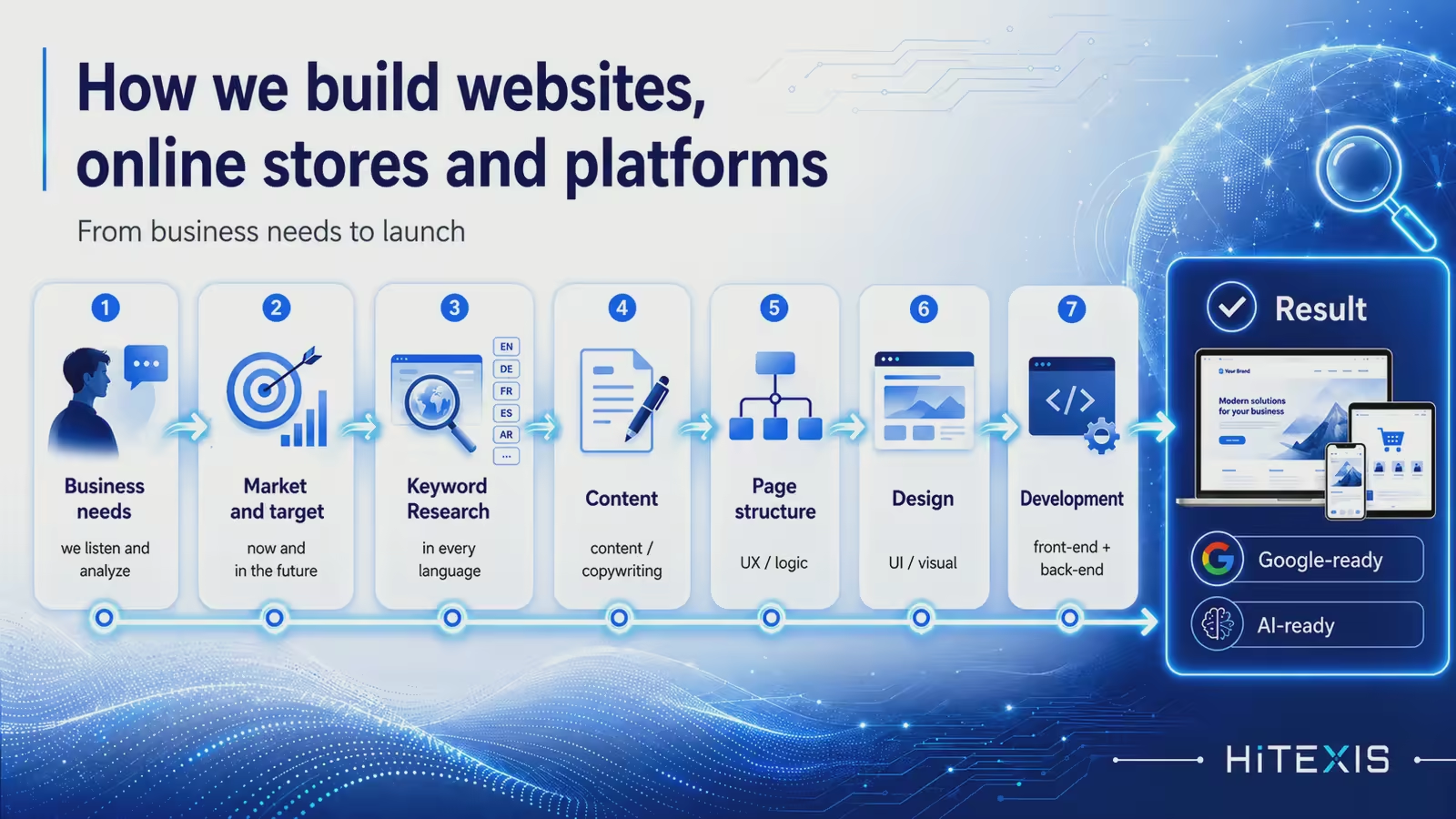
A company decides it is time to launch a new website or redesign the existing one. The first discussions often focus on the visible layer: references, layouts, homepage sections, colors, style, interactions, and what the website should look like. On the surface, this feels logical.

A company decides it is time to launch a new website or redesign the existing one. The first discussions often focus on the visible layer: references, layouts, homepage sections, colors, style, interactions, and what the website should look like. On the surface, this feels logical.
A company decides it is time to launch a new website or redesign the existing one. The first discussions often focus on the visible layer: references, layouts, homepage sections, colors, style, interactions, and what the website should look like. On the surface, this feels logical.

A company decides it is time to launch a new website or redesign the existing one. The first discussions often focus on the visible layer: references, layouts, homepage sections, colors, style, interactions, and what the website should look like. On the surface, this feels logical.

Sometimes a client comes to a studio with a request like: “I want to add functionality — but something isn’t right.” We start digging, and the usual picture appears: the site was built on a website builder, “translations” are handled by an auto-translator, payments are connected through a strange mix of widgets, and most importantly — the site isn’t indexed, there’s no organic traffic, and there’s no reliable tracking.

Stripe sent an email invite to an online event (webinar) about a new e-commerce reality: more and more purchases will be carried out not directly by a person on your website, but by an AI assistant (for example, Copilot, ChatGPT, Gemini, and others). The theme was stated plainly: preparing your storefront for AI shopping agents.

Information search and online shopping are changing. More and more customers no longer “Google” dozens of tabs — they ask an AI: what to buy, how much it costs, who to choose, where to order — and receive a ready-made answer with recommendations and links. This is known as GPT AI Research (AI gathers information and cites sources) and GPT AI Shopping (AI shows products and leads to a purchase).
How offers, audiences, funnels, and roadmaps become clearer
How pages, flows, and content structures improve user understanding
How websites, integrations, automation, and data systems are built
How measurement turns launches into ongoing improvement